IT staff augmentation in Switzerland: a month-end reporting checklist

Your finance team spends each month-end collecting figures, reconciling spreadsheets and preparing management reports. You want to automate the repetitive work, but the underlying data includes information that external engineers should not see unless their task requires it. The immediate decision is not which tool to build. It is who will do the work, who will direct it and what access they will receive.
For a Swiss professional-services SME, IT staff augmentation in Switzerland may be one route, alongside a dedicated development team, a permanent hire or a staffing agency. Each changes the amount of management capacity you need and the boundaries you must agree. This article shows how to choose a route and settle scope, steering, IP, data access and onboarding before work starts.
Which capacity model fits your reporting project?
Start with the work and the owner, not the supplier label. If your CTO or technology lead can define the backlog, review changes and coordinate finance stakeholders, one external senior engineer can extend that team. If reporting automation includes several connected workstreams and you cannot coordinate each engineer’s tasks, a dedicated squad with an agreed lead may be more suitable. If the capability is a continuing part of your organisation, assess a permanent hire. A staffing agency is another sourcing route, but ask exactly who contracts with whom and who directs the day-to-day work.
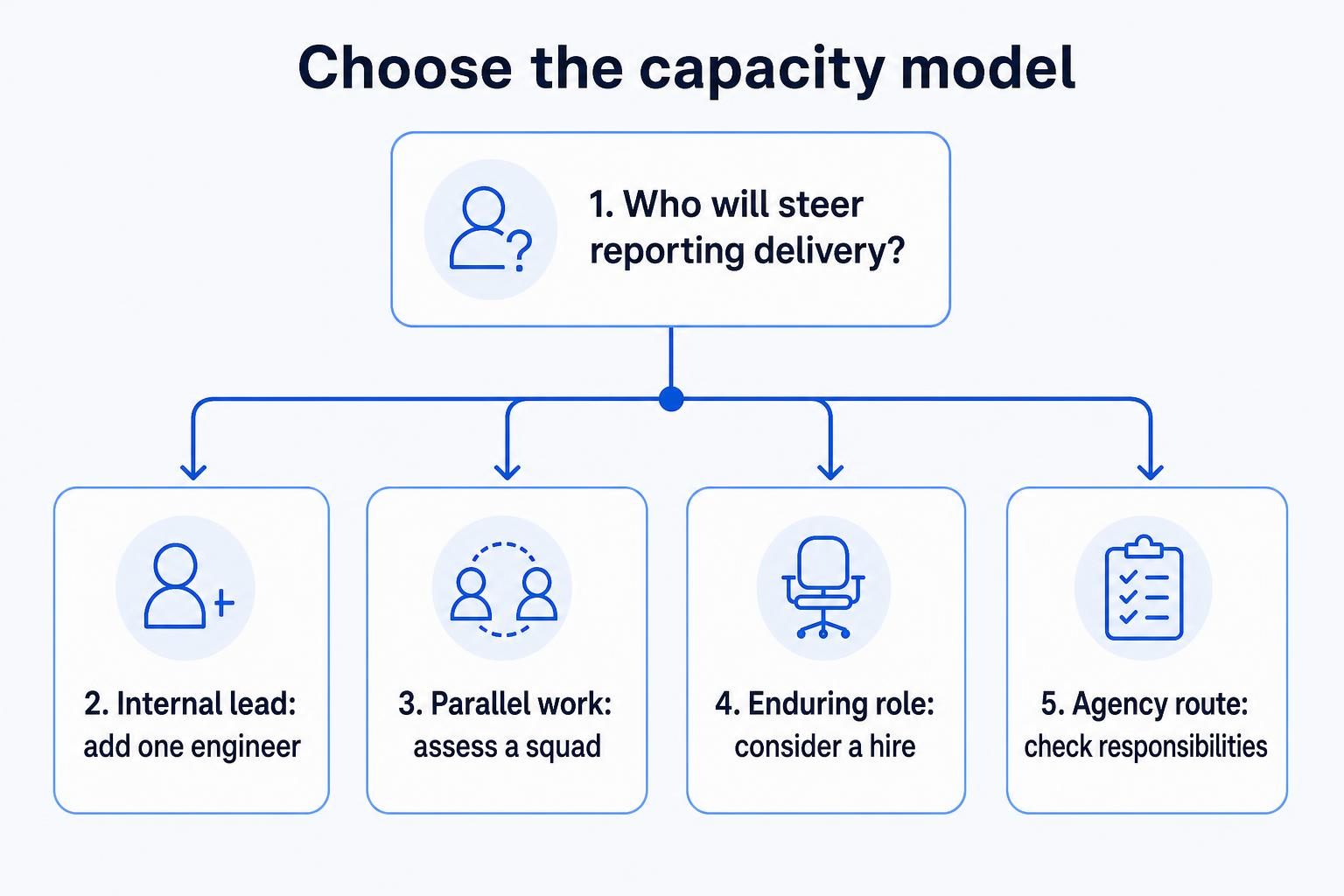
- IT staff augmentation: You retain priorities and technical direction while adding engineering capacity to an existing team. Allow time from your own lead for reviews and decisions.
- Dedicated team: Agree a bounded outcome, decision rights and an interface with finance. A team lead can coordinate delivery, but your business still owns reporting definitions and approval.
- Permanent hiring: Consider this when you need enduring internal ownership beyond the automation project. The hiring and employment decision is separate from buying a B2B engineering service.
- Staffing agency: Compare the actual contractual arrangement, supervision and responsibilities rather than assuming it works like a managed B2B service.
Remoteplatz offers external senior engineers and dedicated squads through a direct B2B service; it is not a recruitment agency and does not place permanent employees. Its senior software engineering service is relevant if you already have someone who can own the reporting requirements and steer delivery. If you are weighing an individual against a squad, use the engagement models overview to frame that discussion. Ask a qualified adviser to review any arrangement where contractual labels and practical day-to-day direction might differ.
Define a first reporting outcome, not a vague automation brief
For this example, assume month-end work involves exporting data from a finance system, combining it with project information and preparing a management pack. Before you request profiles, have the CFO or finance lead name one report, its intended users and the manual steps causing the most rework. The aim of the first phase might be a repeatable draft report for finance to check, not an automated sign-off of the entire close.
- Boundary: List the source systems, the report to be produced and the manual steps that remain with finance. Exclude other reports until you have assessed their data and dependencies.
- Acceptance: Agree how finance will compare the new output with an existing, approved month-end result and record discrepancies. Name the person who accepts the result.
- Exceptions: Identify adjustments, late entries and unusual client matters that need a human decision rather than an assumed rule.
- Dependencies: Confirm who can explain report definitions, provide a safe test dataset and make decisions when source figures conflict.
These choices determine whether you need one engineer to work through a prioritised backlog or a squad to coordinate multiple systems and stakeholders. They also drive the effort: unclear definitions, difficult integrations, constrained test data and a short month-end window can matter more than the number of report pages. The comparison of staff augmentation and a dedicated team for a distributor portal covers the broader team-model decision; here, finance ownership and restricted data access are the deciding constraints.
Agree steering, deliverables and IP before assigning work
Write down who has authority to prioritise work. The CFO or finance lead should own the meaning of the figures and accept the reporting output. The CTO or technology lead should own technical decisions, reviews and release approval. The external engineer or squad should have a named counterpart, an agreed meeting rhythm and a way to raise blocked decisions promptly. If no internal technical lead is available, resolve that gap before treating extra engineering capacity as a substitute for leadership; fractional CTO support is a separate option to assess.
Specify deliverables that your team can keep using: an agreed reporting workflow, documented data mappings and assumptions, reviewed changes, tests and a handover to the people who will operate the process. Agree how changes in scope are approved, who can authorise a release near month-end and what happens if the output does not reconcile. Include access removal and transfer of working materials in the exit plan.
Put confidentiality, rights to work results and the handling of existing tools or third-party components into the contract discussion before work begins. Remoteplatz states that work results and rights to code and intellectual property are contractually assigned to the client; confirm the applicable terms for your engagement. Its B2B service uses one monthly invoice from Remoteplatz GmbH rather than client-side payroll administration. Ask for an individual offer that clarifies scope, currency and VAT; do not compare models on an assumed day rate or ignore the time your own people must spend steering the work.
How should you control access to finance data?
Make access a task-by-task decision. Start with report specifications, sample structures or suitably de-identified data where possible. If an engineer needs live information to investigate a discrepancy, require the finance data owner to approve the purpose, dataset, account and duration. Record how access will be reviewed and removed. A supplier NDA is useful, but it does not replace these decisions.
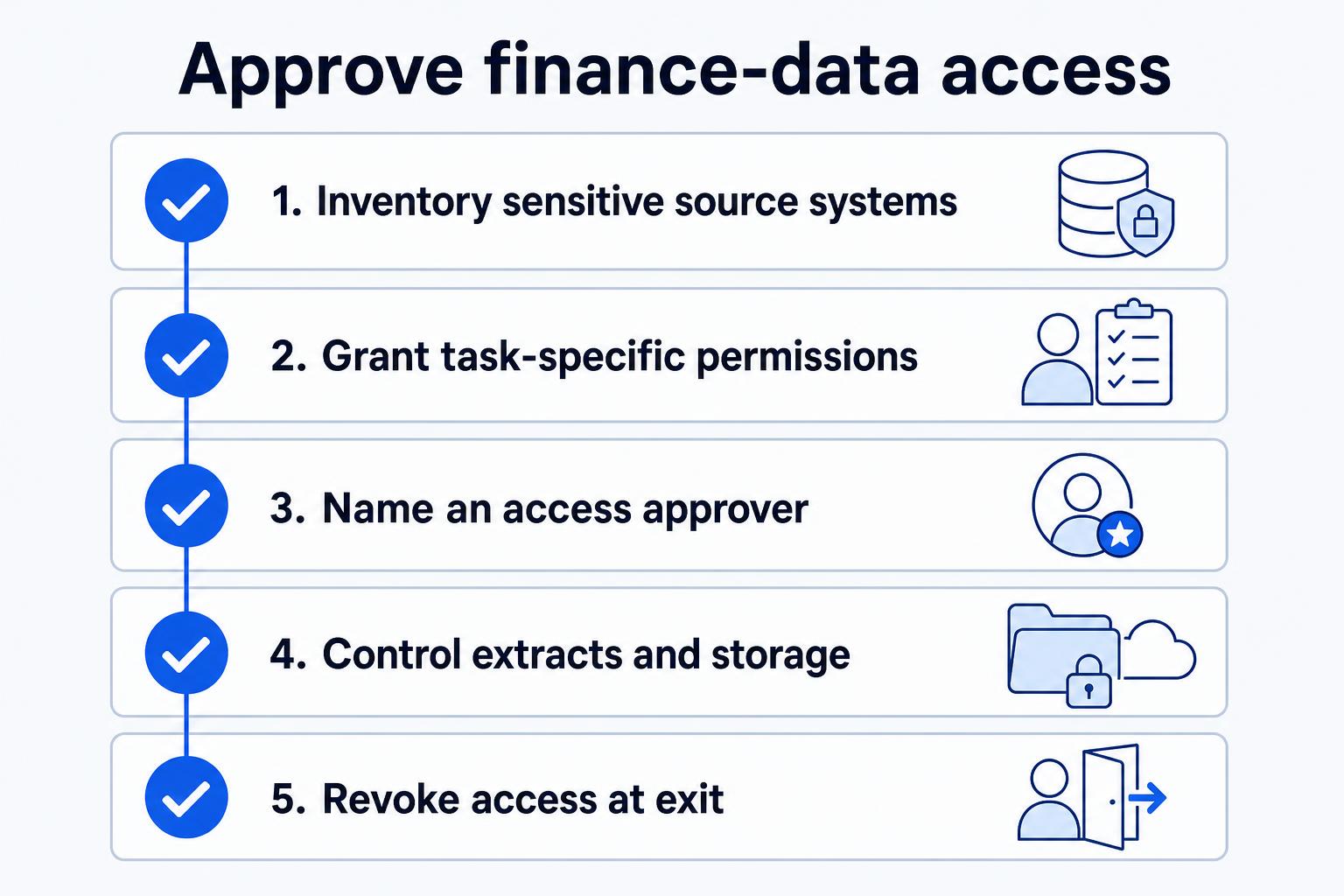
- Data inventory: Identify which systems contain client, employee or commercially sensitive information used in the report.
- Minimum access: Separate design and testing needs from any justified production access; avoid broad shared accounts.
- Approval trail: Name the person who grants access and the person who verifies that it is still needed.
- Working environment: Agree approved tools, where extracts may be stored and whether they may be copied outside your controlled environment.
- Exit control: Set a date and owner for revoking accounts and checking the treatment of retained materials.
Review whether personal data is involved, where it may be accessed or processed, and which contractual and organisational safeguards are appropriate. The customer-data access checklist offers a related access-control perspective, but your finance data inventory and permissions must be specific to this project.
Note: Swiss data-protection, cross-border access, staffing classification, IP and tax questions depend on your circumstances. Have qualified advisers review the applicable arrangements; this does not replace legal or tax advice.
What should happen between scoping and the first month-end?
Do not let a shortlist become permission to start work. Send a brief under NDA that states the report outcome, systems and stack, required seniority, team culture, decision owners and data restrictions. Remoteplatz’s process is to take requirements under NDA, provide a shortlist within 48–72 hours after scoping, arrange a technical interview with your team and then onboard into your tools and working rituals. Work usually starts after 5–10 working days, subject to the engagement; plan your internal approvals rather than treating those timings as a substitute for them.
- Interview for this task: Ask how the engineer would clarify an ambiguous reporting definition, handle a failed reconciliation and work within restricted access. Have finance and your technical lead both participate.
- Approve a narrow start: Give access only to the agreed environment and first task. Check that finance can provide definitions and a test result before the engineer begins.
- Set checkpoints: Schedule a review of the first output, unresolved exceptions and access permissions before expanding scope or data access.
- Prepare handover: Decide who maintains the workflow after the engagement and what evidence they need to operate it at the next close.
If the fit is not right, raise it early; Remoteplatz can provide a replacement profile. A replacement still needs your project briefing and access approvals. For a different example of coordinating external engineers with an existing team, see the Swiss SaaS release-backlog article.
Frequently asked questions
Should we choose a dedicated team if several reports need automating?
Not necessarily. First check whether the reports share systems and definitions, and whether your own lead can sequence the work. A squad becomes more useful when parallel tasks need coordinated delivery and you can give it a clear business owner and boundaries.
Can external engineers start with production finance access?
Make that an exception, not the default. Establish the task, the minimum permissions and the approving data owner first; use safer test material when it can answer the initial questions.
What should we compare in offers if rates are not published?
Compare the proposed scope, seniority, team shape, your steering commitment, access and onboarding work, handover and contractual terms. Request an individual offer for the commercial details rather than assuming that two differently managed models are equivalent.
Conclusion
Before automating month-end reporting, choose the capacity model that fits your ability to steer the work, then agree a limited first outcome, accountable owners and data permissions. If an external engineer or squad fits that plan, review Remoteplatz’s senior software engineering service and book a technical briefing to discuss the scope before access or delivery begins.