Interim CTO Zurich: A Board Checklist for a Technology Carve-Out

Assume your Swiss company is preparing to divest a business unit. Its systems and technology team are partly shared with the parent, the transaction timetable is moving, and neither side can afford an unclear decision on access, delivery or ownership. You may need an interim cto zurich to lead the separation work while you decide what permanent technology leadership the divested unit will need.
The board’s first task is not to find someone who can simply ‘run IT’. It is to define what the interim leader may decide, what must be escalated, and what evidence will show that the business can operate through separation. This article shows how to choose an interim CTO, set a bounded mandate and plan the handover without leaving a poor provider fit to become a transaction risk.
When does a carve-out need an interim CTO?
A carve-out creates a leadership gap when the existing CTO cannot represent both the parent’s priorities and the divested unit’s needs, or when no single leader has capacity to coordinate the shared systems, team and delivery decisions. A CTO departure can make that gap immediate. Post-funding growth may also have stretched a technology organisation before a transaction adds another set of decisions.
Choose the role by the work required, not by the title. An interim CTO is appropriate when you need one accountable technology leader for a fixed period to assess risks, direct priorities and prepare the successor. If your permanent leader is in place and needs limited ongoing advice, a fractional CTO arrangement may fit better. If the main question is what a buyer should verify before committing, distinguish leadership of the separation from a seller’s technical due diligence preparation.
Ask the CEO and transaction lead to identify the decisions that lack an owner now. If those decisions affect both the transaction and day-to-day delivery, give the interim mandate a named board sponsor before interviewing providers.
What must the board put in the carve-out mandate?
Start with an assessment of architecture, code quality, the team, processes and risks. Use it to agree a priority plan with leadership and identify immediate actions. The mandate should then specify how the interim CTO will maintain stable delivery, establish clear roles, and report against an agreed roadmap and KPIs. This is a leadership assignment, not an instruction to promise that every system will be separated by a particular date.
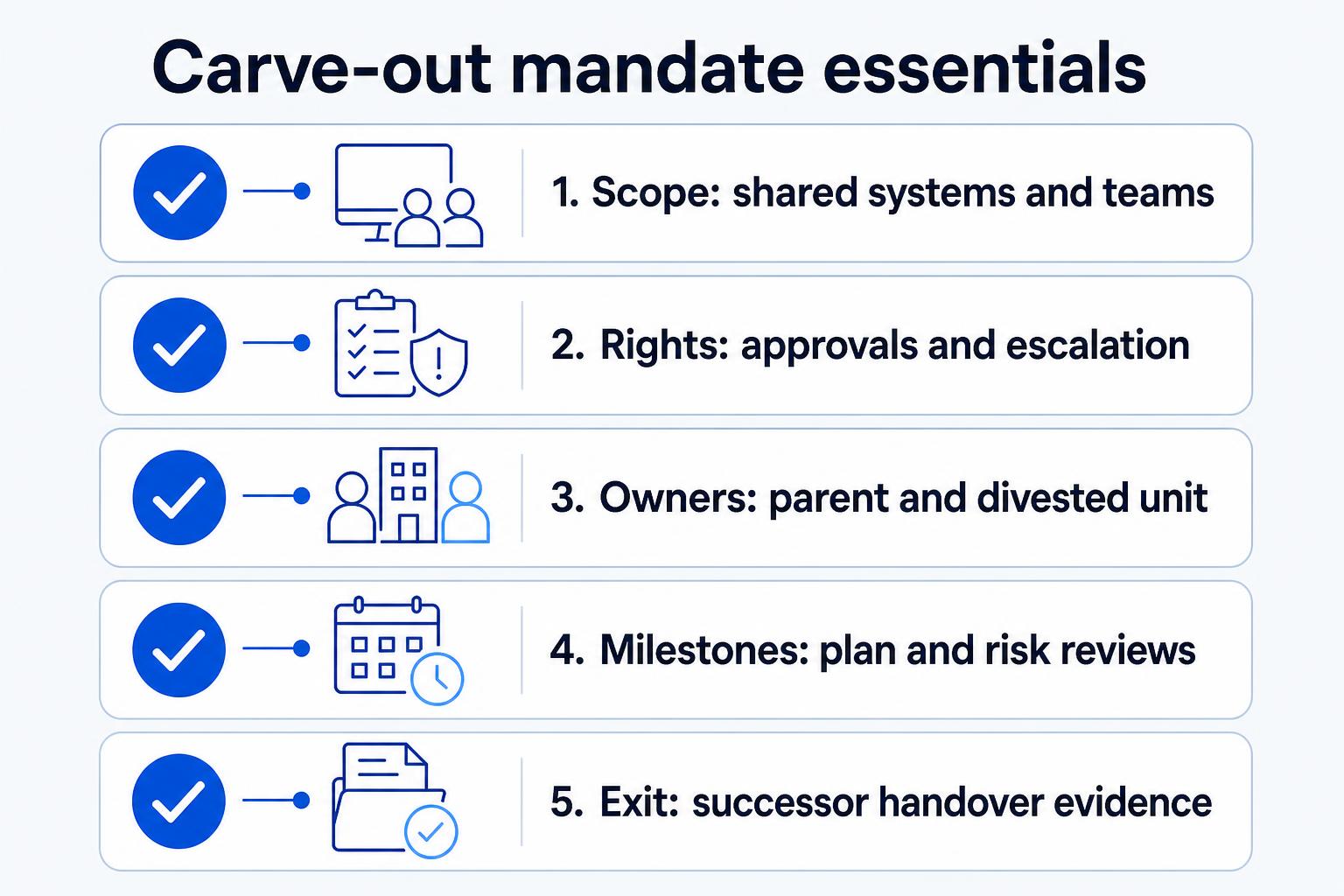
- Scope: List the products, systems, data flows, contracts and people in scope, and identify shared dependencies that need a parent-company decision.
- Decision rights: State which operational priorities the interim CTO can set, which changes need approval from the CEO or transaction lead, and which matters go to the board.
- Interfaces: Name the parent-side technology owner, the divested unit’s business owner and the person responsible for coordinating transaction advisers.
- Milestones: Agree an initial dependency map, a prioritised separation plan, regular risk and delivery reviews, and evidence for handover. Tie any transaction deadline to decisions and dependencies the interim CTO can actually influence.
- Escalation: Define what happens when an access, supplier or shared-team decision blocks the plan, including who may accept the resulting business risk.
For a broader vacancy rather than a carve-out, the CTO-departure mandate checklist addresses a different starting point. Here, make the parent–divested-unit boundary explicit: an interim CTO cannot resolve conflicting authority that the board has left open.
How do you test an interim CTO Zurich provider for fit?
Use the same carve-out brief for every candidate. Ask each person to walk through how they would establish the shared-system baseline, keep essential delivery running and bring a disputed decision to the right owner. You are testing judgement and communication as well as technical range; a confident account of a past transaction is not a substitute for a workable approach to yours.
- Relevant scope: Can the candidate distinguish systems that must separate from services that may need a managed transition, without assuming the answer before assessment?
- Authority: Will they work within the board’s decision rights and make unresolved dependencies visible, rather than quietly taking ownership of decisions reserved for management?
- Team fit: How will they give the existing team clear priorities while maintaining delivery during uncertainty?
- Availability: Can the proposed working pattern cover decision meetings and escalation points, including key meetings arranged individually around remote-first CET collaboration?
- Exit discipline: What records, role definition and onboarding work will make a permanent successor effective without relying on the interim leader’s memory?
To limit the risk of a poor provider fit, request a defined initial assessment and a board review before committing the next phase of work. Agree the deliverables and review criteria in the mandate; do not treat a shortlist or a fast start as proof of suitability. Remoteplatz describes its interim CTO service as temporary leadership that closes a gap, stabilises delivery and prepares a permanent successor. After a scoping call, it provides a shortlist within 48–72 hours, and work usually starts after 5–10 working days; these are planning inputs, not a reason to skip your assessment.
How should you control milestones, spend and operating risk?
Run the mandate for a fixed agreed term and review it against decisions made, risks surfaced and continuity of delivery—not only the number of separation tasks closed. An early review should confirm the dependency map and immediate safeguards. Subsequent reviews should test whether owners have made the decisions needed to progress, whether the roadmap still reflects the transaction plan, and what the successor will inherit.
Cost depends on the agreed days, duration, scope and level of leadership involvement. Remoteplatz’s approved guide price for an interim CTO working 3–5 days a week starts at CHF 1,000 per day net; the binding offer follows a scoping call. Its interim mandates have an agreed term and a monthly management fee. Check the engagement models and costs when you compare the proposed working pattern with the work and decision cadence. Do not budget on a day rate alone: ask what is included in the mandate, how changes are approved and which board or workshop meetings need to be arranged.
Before work begins, confirm access, confidentiality, information handling and the contractual assignment of work results and intellectual property. Remoteplatz states that it works directly B2B and invoices clients monthly; it is not a recruitment agency and does not provide permanent placement. Have your advisers review the agreement and any transaction-specific data, supplier or separation obligations.
Note: Contract, data-protection, VAT and other transaction obligations depend on your circumstances; this does not replace legal or tax advice.
What makes the handover to permanent leadership credible?
Plan the exit when you approve the interim mandate, not when the transaction is nearly complete. Decide whether the permanent leader will run an independent technology organisation, manage continuing services from the parent, or lead further separation work. That choice affects the role profile and the point at which the successor should join.
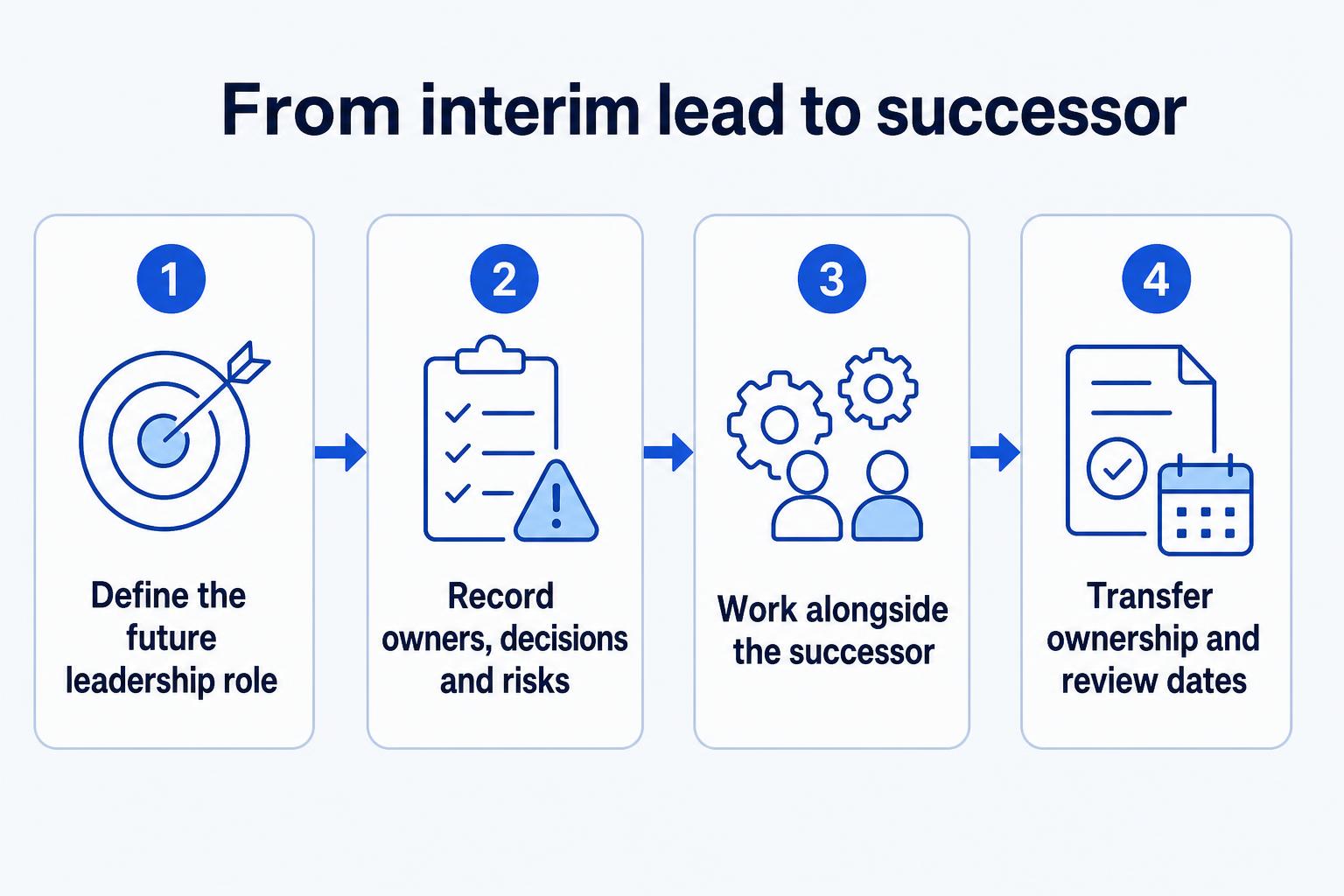
Require a handover pack that names system and supplier owners, remaining shared dependencies, decisions already taken, open risks, delivery commitments and the next review dates. Arrange direct working sessions between the interim and permanent leaders so that ownership transfers in practice. On request, Remoteplatz’s interim CTO can define the successor’s role profile, run technical interviews and onboard the new leader; the client remains responsible for its permanent hiring decision.
If the permanent hire is not ready, do not assume the interim mandate must continue unchanged. Reassess the remaining decisions and capacity needed; an interim mandate can move to a fractional model where that better fits the work. Conversely, do not end the mandate solely because a new leader has accepted the role: agree the evidence and responsibilities needed for a controlled handover.
Frequently asked questions
Can the interim CTO make separation decisions for the board?
Only within authority you explicitly delegate. Reserve transaction commitments and material risk acceptance for the appropriate company decision-makers, and give the interim CTO a clear escalation route for blocked work.
Should we appoint an interim CTO before the permanent role is defined?
Yes, if the immediate need is to assess dependencies and lead delivery. Make defining the future role an explicit early output rather than assuming the interim and permanent jobs are identical.
How do we avoid paying for an open-ended carve-out mandate?
Agree a fixed term, working pattern, review points and change-approval process. Use the initial assessment to refine scope, then decide whether to continue, adjust or hand over based on documented work and remaining risks.
Conclusion
Choose an interim CTO for a carve-out by testing their ability to work within clear decision rights, expose shared dependencies, protect delivery and leave a usable handover—not simply by their availability. Review the Remoteplatz interim CTO service and book a technical briefing to discuss the scope and decision points your board needs to define.