Interim CTO Zurich: Covering a Six-Month Absence

Your sole technology leader will be unavailable for six months. The platform still needs executive oversight, a critical vendor expects decisions, and the team needs someone who can settle priorities. As CEO, you cannot simply leave every decision until your leader returns.
For a Zurich SME, an interim CTO Zurich mandate is one option, not the automatic answer. You need to decide what authority is missing, what the team can safely manage itself, and who will take ownership when the absence ends. This article shows you how to make that decision, define a bounded mandate and plan the handover from the outset.
Interim CTO Zurich: when is temporary cover justified?
Start with the decisions due during the absence, not a job title. Ask your technology team, product owner and relevant business leaders to identify commitments that need a technology leader’s judgement: platform risk, delivery trade-offs, vendor negotiations and changes to the roadmap. Then decide whether an existing leader has the capacity and authority to own them.
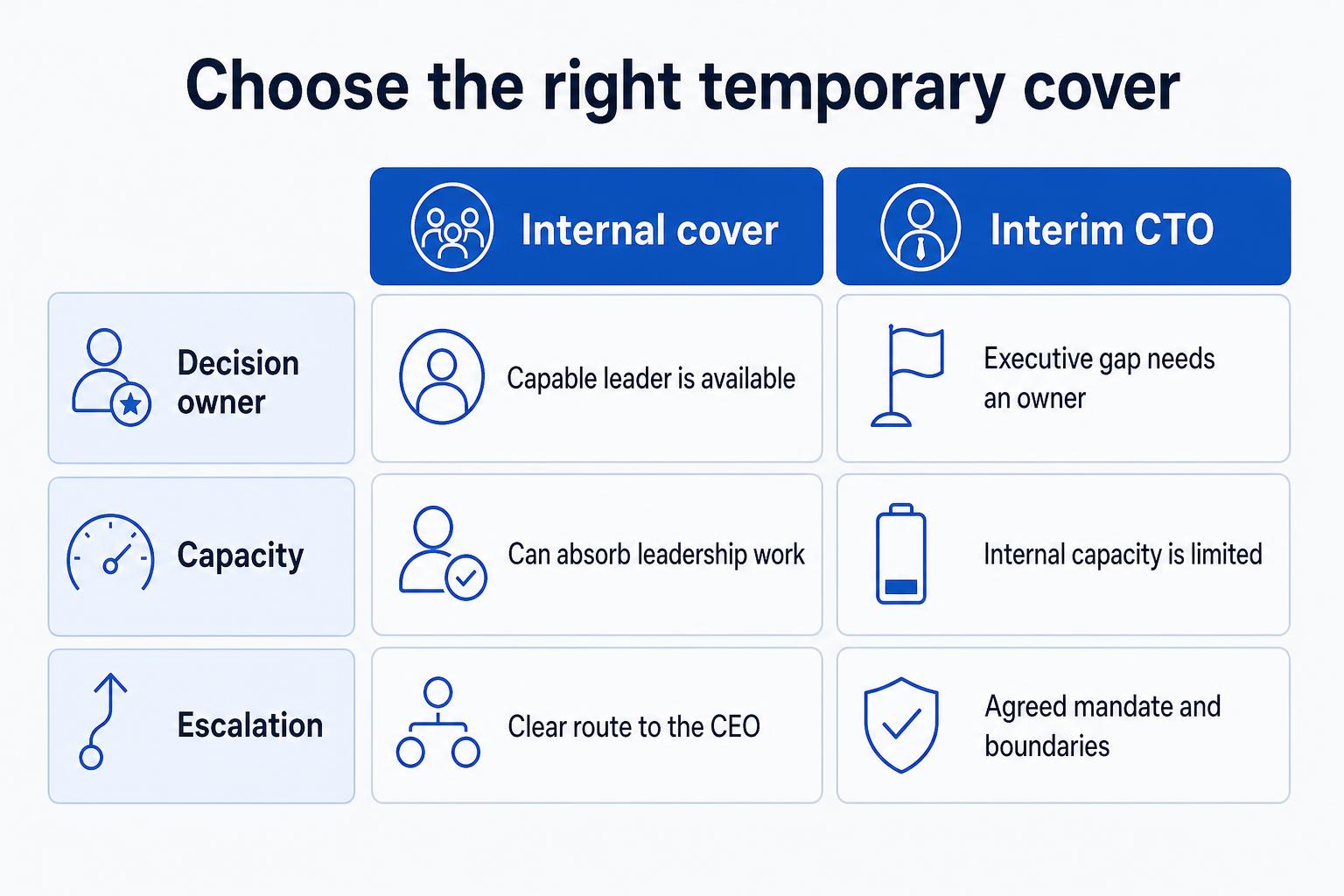
- Use internal cover: Consider it when a capable leader can make the necessary decisions, the work is relatively stable and you can give that person a clear escalation route to the CEO.
- Consider an interim CTO: Consider it when executive technology decisions cannot wait, several teams or vendors need one accountable owner, or internal cover would leave a critical function unmanaged.
- Separate the longer-term question: If the absence becomes a departure, plan the successor role separately. An interim mandate should protect delivery while you decide, not become an unexamined permanent appointment.
A departure, post-funding growth or a transaction can also create a leadership gap, but each calls for a different mandate. This checklist addresses a defined absence with a possible return; for an unexpected resignation, see how to scope an interim CTO mandate after a CTO resigns. If you only need continuing, limited strategic input rather than day-to-day executive cover, compare the fractional CTO option.
Set decision rights before the mandate starts
Write a short mandate that the CEO, the unavailable leader where possible, and the relevant business owners can understand. Name the outcomes you need during the six months, the decisions the interim CTO may make, and the decisions that remain with you or the board. This reduces the risk of hiring someone impressive but unsuited to the actual gap.
- Business priorities: Identify the platform and vendor commitments that cannot slip, along with work that can wait for the returning leader.
- Authority: Specify who approves changes to priorities, vendor commitments, material spending and risk acceptance. Give the interim CTO authority over agreed technology decisions, with an escalation route for matters outside that boundary.
- Team leadership: State who sets sprint priorities, resolves cross-team conflicts and communicates changes to product and operations. Do not make the team guess whether the interim CTO or CEO has the final word.
- Reporting: Agree on a small set of indicators that you can review regularly, such as delivery commitments, material risks and unresolved decisions. Define the meeting in which you will review them.
- End point: Record the expected return date, a review point if availability changes, and who will approve any change to the mandate.
Ask candidates to walk through how they would handle a real decision from your backlog, including what they would escalate rather than decide alone. Check their experience of leading teams and managing vendors in a comparable setting. The risk of a mis-hire is not just poor technical judgement: unclear authority or a poor fit with your existing leaders can delay decisions for months. Remoteplatz’s Interim CTO service is designed for a fixed, agreed leadership gap; its assessment and priority plan should be tied to the outcomes in your mandate.
Run the six-month mandate in defined phases
Treat the following as a proposed sequence for this scenario, not a guaranteed timetable. The precise pace depends on the state of the platform, the team and how much the absent leader can contribute before leaving.
Assess and agree immediate actions
Begin with an assessment of architecture, code quality, the team, delivery processes and material risks. Ask for a concise account of what needs action now, what needs further investigation and what can safely wait. Agree a priority plan with leadership before changing the roadmap. This keeps an interim CTO from treating every inherited concern as an emergency.
Stabilise delivery and keep decisions visible
Make ownership of sprints, vendor discussions and risk escalations explicit. Review the agreed roadmap and indicators with the CEO at a regular cadence, and record consequential decisions with their rationale. The aim is stable delivery and clear roles, not a large transformation programme squeezed into an absence. If the team also lacks implementation capacity, decide separately whether it needs senior engineering support; adding engineers does not itself resolve an executive decision gap.
Prepare for the next owner
Do not wait until the final weeks to organise the handover. Keep an accessible record of commitments, vendor contacts, open risks, decisions and deferred work throughout the mandate. If the original leader cannot return, decide whether to seek a permanent hire or continue with another agreed leadership model. On request, an interim CTO can help define a successor’s role profile, run technical interviews and onboard the new leader. Remoteplatz does not provide permanent placement.
A fixed-term interim mandate can be full-time or three to four days a week, with a monthly management fee. Choose the level of involvement by looking at the volume of decisions and team leadership required, rather than assuming maximum coverage is always necessary. For a broader explanation of the available arrangements, see engagement models.
Protect the team from a second leadership gap
Temporary cover can fail if the CEO treats the interim CTO as the sole holder of context. Assign a business-side owner for the mandate and make the technology team part of routine decisions. Agree where decisions and supporting information will be recorded, who can access them, and how an urgent issue is escalated when the interim CTO is unavailable.
Before work begins, confirm practical access to systems and vendor contacts, confidentiality expectations, and ownership of work results in the agreement. Limit access to what the mandate needs and check the arrangements against your organisation’s data-handling requirements. Remote-first collaboration in CET may suit routine work; arrange any essential workshops or board meetings individually.
Note: Have your advisers review contractual rights, confidentiality, data protection and any employment or tax implications for your circumstances; this does not replace legal or tax advice.
Set a check-in with the returning leader if they are available and want one, but do not make continuity depend on it. If their return becomes uncertain, revisit the end-state decision promptly. The scale-up succession checklist covers a departure scenario; your immediate task here is to keep a planned absence from turning into an unmanaged one.
Plan the handover to a returning leader or permanent hire
Define acceptance criteria while you can still influence what the interim CTO records. A handover is not complete because a document has been sent. The incoming leader needs time to test the account of the platform, meet the team and vendors, and take over live decisions.
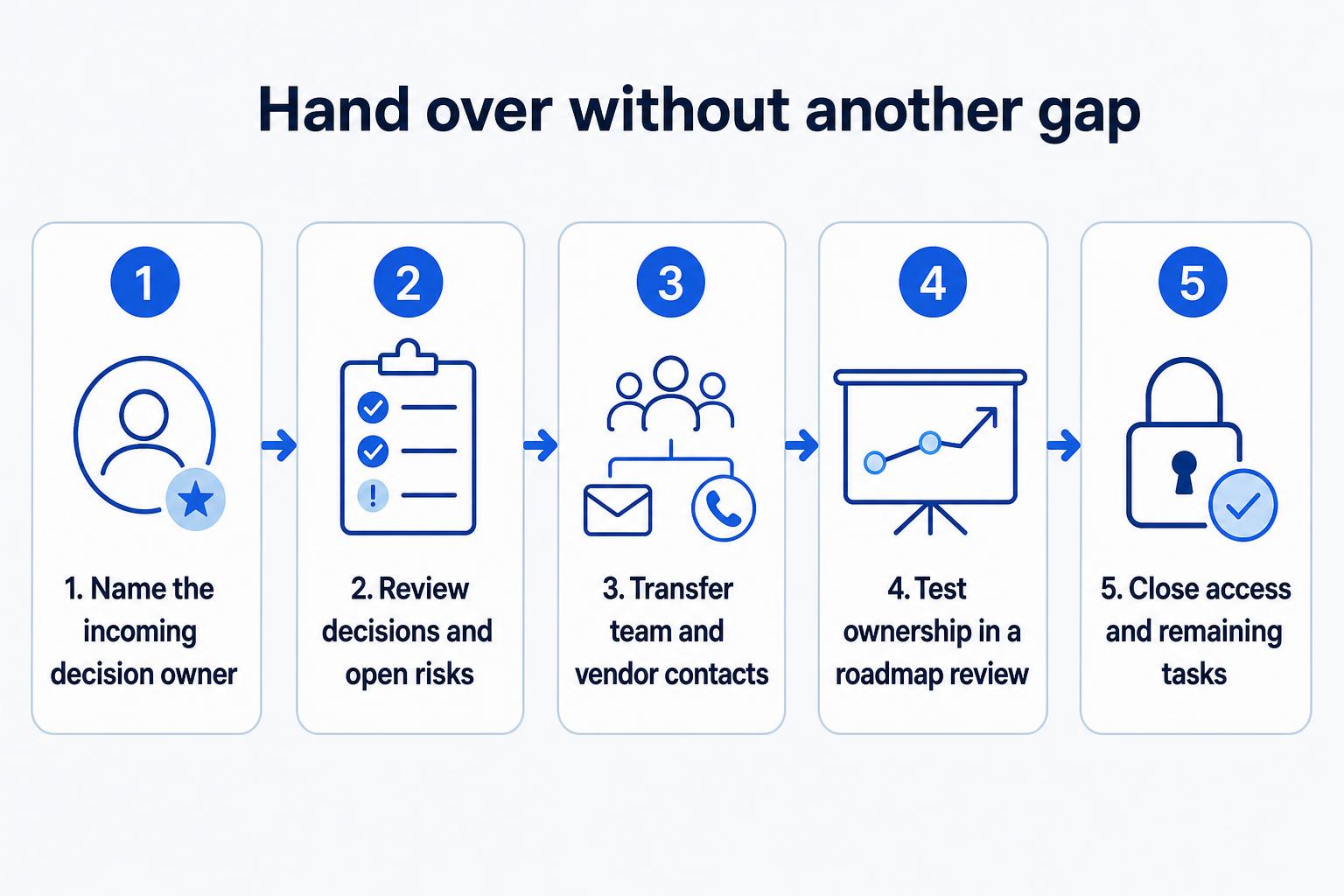
- Confirm the recipient: Establish whether the original leader is returning, another internal leader will take over, or you are hiring a permanent successor. If the position is still open, name a temporary decision owner rather than allowing a gap.
- Review the decision record: Walk through major changes, why they were made, outstanding risks, vendor commitments and work deliberately deferred until after the absence.
- Transfer relationships: Introduce the recipient to team leads, business stakeholders and key vendors, with clarity about when the interim CTO stops making decisions.
- Test ownership: Have the recipient lead a roadmap and risk review while the interim CTO can still answer questions. Agree who resolves any disputed priority.
- Close the mandate: Confirm access changes, remaining deliverables and the route for any follow-up questions before the agreed term ends.
A returning CTO may want to reconsider choices made in their absence. Give them the rationale and the constraints that applied at the time, rather than asking them to accept every decision unchanged. If you instead appoint a permanent successor, assess that person against the role your organisation now needs. For a departure rather than a planned return, the mandate-scoping guide provides a separate starting point.
Frequently asked questions
Could a senior engineer cover the six months instead?
Possibly, if they have the capacity and authority to lead the team, make cross-functional trade-offs and manage the relevant vendors. If they would still have to refer every consequential decision to you, define that arrangement honestly and consider whether temporary CTO leadership would remove the bottleneck.
Should we commit to a permanent CTO hire immediately?
Not solely because of a planned absence. First establish the expected return and the leadership work required during it. If the return becomes unlikely, define the permanent role separately while maintaining an accountable owner for current decisions.
What should we settle in an initial scoping conversation?
Bring your expected absence dates, urgent platform and vendor decisions, team structure, proposed decision boundaries and handover expectations. This gives you a basis for discussing the mandate’s scope and level of involvement without assuming an arrangement before the gap is understood.
Conclusion
For a six-month absence, appoint an interim CTO only if the decisions and leadership load justify it. Give the mandate clear authority, review points and a named handover recipient from the start. If that is the gap you face, review the Interim CTO service and book a technical briefing to scope the cover you need.
Discuss your six-month leadership gap, decision rights and handover requirements. Book a technical briefing