Technical due diligence in Switzerland: a seed-round checklist
Technically reviewed by Karl Zakhary, Software Engineer at RaiseNow

You are preparing for your first institutional seed round. Your climate-tech product has made progress, but the evidence sits across prototypes, customer discussions, test results and files held by different people. Before an investor asks questions, you need to know which claims you can substantiate and which gaps could slow a review.
For a Swiss start-up, technical due diligence in Switzerland is not just a code audit. It may also test whether your product works as described, who owns the relevant intellectual property (IP), what remains unproven and whether the team can explain its next technical milestones. This article shows how to organise that evidence, prioritise gaps and decide when an external reviewer is worth involving.
Technical due diligence in Switzerland: what will investors want to establish?
Start with the claims you make in your fundraising materials, not a generic document request. Investors’ questions will depend on your product and the proposed investment. For a climate-tech start-up, a prototype, software platform and physical deployment may each need different evidence. A claim about measured performance needs a different record from a claim about a planned capability.
- Product maturity: Which features, prototypes or deployments exist today, and under what conditions have they been tested?
- Technical risk: Which components, integrations or suppliers could prevent the next milestone?
- Evidence quality: Can someone trace an important claim to a dated test, customer acceptance record, demonstration or other underlying material?
- Delivery capability: Who maintains the product, makes technical decisions and owns the roadmap after the round?
- Rights and dependencies: Can you explain who contributed to the product and what permissions or third-party arrangements its continued use depends on?
This is a preparation exercise for a company seeking investment, not the acquisition perspective covered in our SaaS buyer’s board checklist. If you are planning a later, more extensive funding round, the Series A architecture preparation guide addresses a different stage.
Build an evidence register before building a data room
A data room is easier to assemble once you know what each document is meant to prove. Make a short evidence register with four fields for every material claim: the claim, the supporting record, the person who can explain it and the gap or limitation. Distinguish demonstrated results from forecasts and internal targets. An honest limitation is easier to manage than a confident statement that no one can verify.
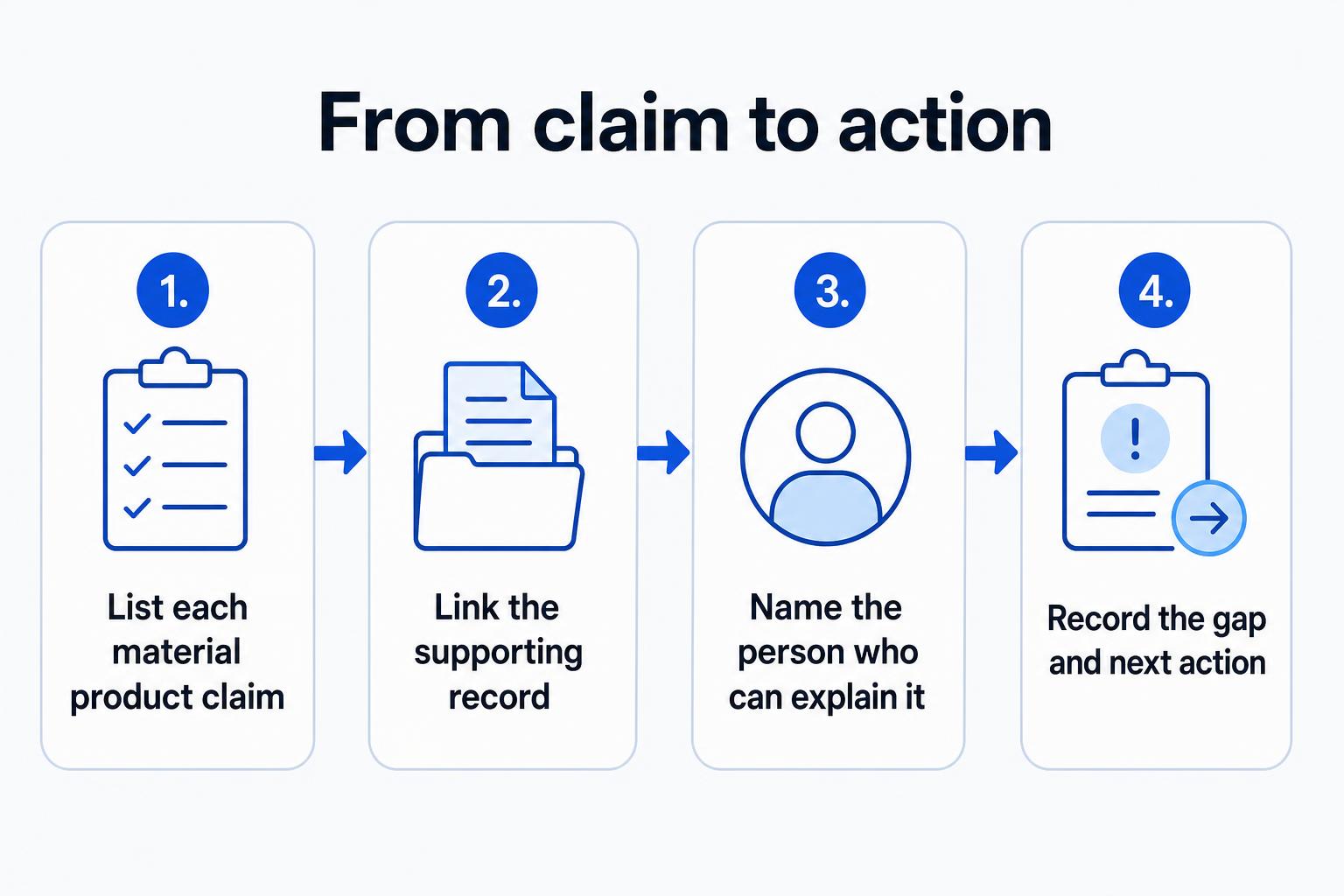
What to collect for product and technical evidence
- Product state: A current product description that separates live capabilities, prototypes and planned work.
- Validation: Test methods, conditions, dates and results for the claims most important to your investment case. Record failed or inconclusive tests where they materially affect a claim.
- Architecture: A readable overview of major components, data flows, external services and critical dependencies, with an owner for each area.
- Operations: Evidence of how you handle access, backups, incidents and changes, proportionate to the product’s current maturity.
- Roadmap: The next technical milestones, their assumptions, dependencies and decision owners.
For an illustrative Zurich-based climate-tech start-up, a founder might initially describe a field trial as proof of production readiness. The register may show that the trial establishes performance under limited conditions but not yet reliability across customer sites. The immediate task is to qualify the claim and plan the missing validation, not to write a more polished description.
Rank each gap by its effect on a fundraising claim or near-term milestone. Assign an owner and a response: provide existing evidence, run a defined check, correct the claim or disclose an unresolved risk. The exact material requested can change during investor diligence, so keep the register usable beyond the first data-room upload.
Check IP records and documentation for breaks in the chain
An IP folder needs more than a list of patents or repositories. List the people and organisations that contributed to the product, including founders, employees, agencies, research partners and other collaborators where relevant. For each contribution, identify the agreement or record your advisers should review and note any missing paperwork. Track external software, datasets, hardware designs, research outputs and licences that the product depends on.
Keep this separate from technical documentation. A signed agreement may address a rights question, but it does not explain how a system works; a repository may show work was done, but it does not settle ownership. Your technical pack should let a reviewer understand the current design, significant decisions, deployment or test environment, and known limitations without relying entirely on one founder’s memory.
If a university collaboration, customer agreement or contractor contribution makes ownership unclear, flag it early for qualified legal review rather than treating it as a documentation tidy-up. The same applies to questions about confidentiality, permitted data use or rights in third-party material.
Note: IP ownership, licensing and data-use requirements depend on the relevant agreements and circumstances; seek qualified professional advice. This does not replace legal or tax advice.
When should you bring in an external reviewer?
First decide what decision the review must support. You may need a limited independent check of your evidence and risk statements, or temporary technology leadership to resolve gaps, direct engineers and explain trade-offs to investors. Those are different scopes. A request for a ‘code audit startup Zurich’ may be too narrow if your main uncertainty concerns field-test claims, IP records or delivery ownership.
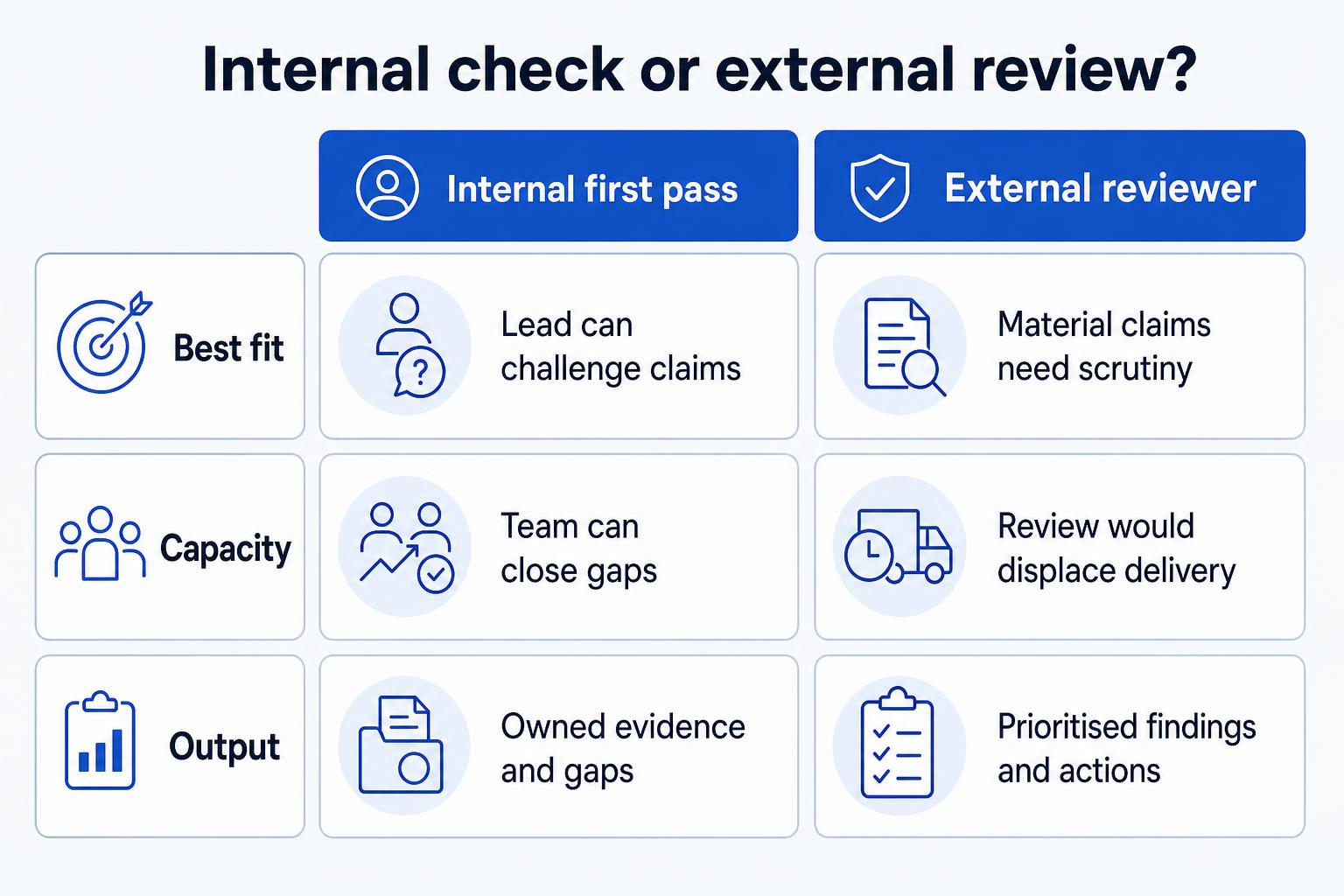
Keep the first pass internal when a technical lead can challenge the claims, access the records and get gaps closed without displacing critical product work. Seek an external perspective when no one can independently assess the evidence, a material claim is contested, documentation depends on one person, or the team needs a credible owner to turn findings into decisions.
Scope the engagement before asking for proposals
- Question: State whether you need an evidence-readiness review, an architecture assessment, a targeted code review or ongoing technical leadership.
- Boundary: Identify the product areas, claims and materials in scope, plus what the reviewer will not assess.
- Output: Request prioritised findings, supporting observations, unresolved questions and named next actions rather than a general assurance statement.
- Access: Agree how sensitive materials will be shared and who within your company can answer questions.
- Independence: Decide whether the person who helps remedy gaps should also present themselves as an independent assessor of that work.
A fractional CTO can take responsibility for technology decisions, architecture reviews, technical diligence preparation and communication with leadership or investors at a reduced commitment. That is different from commissioning a bounded independent assessment. If you need help choosing a working arrangement, review the engagement models; if the immediate issue is continuity after an agency-built product, see the agency-exit checklist.
Turn the findings into a seed-round action plan
Do not wait for every gap to disappear. Separate what must be checked before investor access from what can be disclosed with a credible remediation plan. A useful action list gives each issue a severity, an owner, the evidence needed to close it and the milestone it affects. The founders should own claims made to investors; the technical lead should own the technical explanation; your advisers should handle questions outside the team’s technical competence.
Before opening materials to investors, run a short walkthrough with someone who did not prepare them. Ask them to follow one central product claim from your presentation to its underlying evidence, find the current system description and identify the owner of each unresolved issue. If they cannot, simplify the index or fix the missing record. A polished data room is less useful than one that lets a reviewer find an accurate answer quickly.
Keep the response proportionate. An external review may be justified for a concentrated, material uncertainty; ongoing leadership may be more useful if findings expose repeated decision or ownership gaps. Neither option substitutes for your responsibility to present the product and its limitations accurately.
Frequently asked questions
Do we need a full code audit before a first institutional seed round?
Not automatically. Start with the claims and risks most relevant to your product. A targeted code review may help where maintainability, security or a critical component is in question, but it will not verify field-test results or resolve an IP-record gap.
What if our evidence is incomplete when investors ask for it?
Say what has been demonstrated, under which conditions, and what remains to be checked. Give the gap an owner and a realistic next action rather than presenting a plan as completed evidence.
Can the same external CTO prepare us and provide an independent review?
They can help prepare materials and challenge your assumptions, but you should distinguish that support from an independent assessment of work they directed. Agree the role and any independence requirements before engagement.
Conclusion
Before your first institutional seed round, trace important claims to evidence, identify missing rights records, make technical decisions understandable and assign owners to the gaps. If those tasks exceed your team’s current capacity, consider the scope of a fractional CTO and book a technical briefing to discuss what needs review before investors begin their diligence.